
SSN Trace Benefits & Limitations
One of the most misunderstood components of a background check is the Social Security Number (SSN) Trace. Many applicants believe it searches criminal records or verifies identity by itself. In reality, an SSN Trace serves a different—but very important—purpose.
Understanding how an SSN Trace works can help administrators build more accurate background screening programs and help applicants better understand the screening process.
What Is an SSN Trace?
An SSN Trace is a database search that uses an individual’s name and Social Security Number to identify information commonly associated with that person.
An SSN Trace may identify:
- Previous names
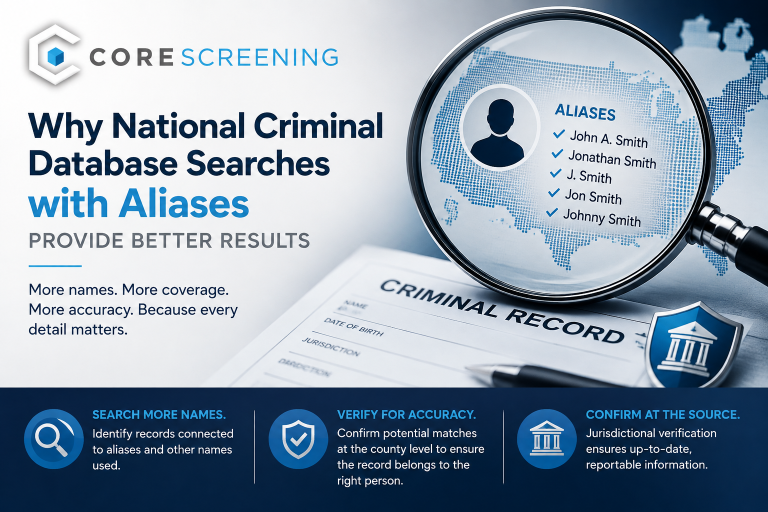
- Known aliases
- Prior addresses
- Approximate dates associated with residences
- States and counties where records may exist
It does not search criminal records.
Instead, it helps identify where additional criminal record searches should be conducted.
Why Employers Use an SSN Trace
Many criminal records are maintained at the county level.
If an applicant has lived in several counties over the past seven years, employers may not know where to search without first identifying those jurisdictions.
An SSN Trace helps uncover address history that can guide more comprehensive county criminal searches.
What an SSN Trace Does Not Do
An SSN Trace does not:
- Verify employment
- Verify education
- Search criminal records
- Determine eligibility for employment
- Verify immigration status
- Provide a credit report
It is a research tool—not a criminal background check.
Does an SSN Trace Reveal Every Address?
No.
The information returned by an SSN Trace is compiled from multiple third-party data sources and may not include every residence associated with an individual. Because the underlying sources contributing to the database are not disclosed, an SSN Trace itself is generally not considered a Fair Credit Reporting Act (FCRA)-compliant consumer report. Instead, it is used as an investigative tool to help identify potential address history and aliases that may guide additional background screening searches. Information obtained solely from an SSN Trace database is not intended to be relied upon as reportable information, and consumers generally cannot dispute the underlying database entries directly through the SSN Trace provider.
For this reason, organizations often combine an SSN Trace with county criminal searches, federal criminal searches, and other screening components depending on the position.
Is an SSN Trace Required?
Not always.
Whether an organization uses an SSN Trace depends on:
- Company policy
- Industry requirements
- State laws
- Position responsibilities
- Overall screening package
Why Accuracy Matters
Because an SSN Trace helps identify jurisdictions for additional searches, accuracy is essential.
An incomplete address history could result in administrators overlooking counties where relevant records may exist.
Working with an experienced background screening provider helps organizations develop screening packages that align with their hiring needs and applicable laws.
Frequently Asked Questions
Does an SSN Trace search criminal records?
No. It identifies address history and possible aliases to help determine where criminal searches should be conducted.
Can an SSN Trace verify identity?
An SSN Trace may identify information associated with an individual, but it is not a standalone identity verification tool.
How far back does an SSN Trace go?
Results vary depending on available records and data sources. Address histories may span several years but are not guaranteed to include every residence.
Is an SSN Trace the same as a background check?
No. It is often one component of a more comprehensive background screening program.
Final Thoughts
An SSN Trace is a valuable research tool that helps administrators conduct more thorough and informed background screenings. While it does not search criminal records itself, it provides important address history and alias information that can improve the effectiveness of county-level criminal searches.
Understanding what an SSN Trace does—and does not do—helps administrators build stronger screening programs and helps applicants better understand the background check process.